Permanent Makeup & Areola Tattoo Tips & Info

Making Scars Less Noticeable With Scar Camouflage in Wentzville
Scars don't just sit on your skin. They stick with you—mentally, socially, sometimes financially if you're covering them up day after day. Most people assume they're stuck with whatever mark their body left behind. But scar camouflage flips that assumption. It's not makeup. It's not a filter. It's pigment placed under the skin, matched to your tone, designed to make that scar blend so well you forget it was ever a focal point.
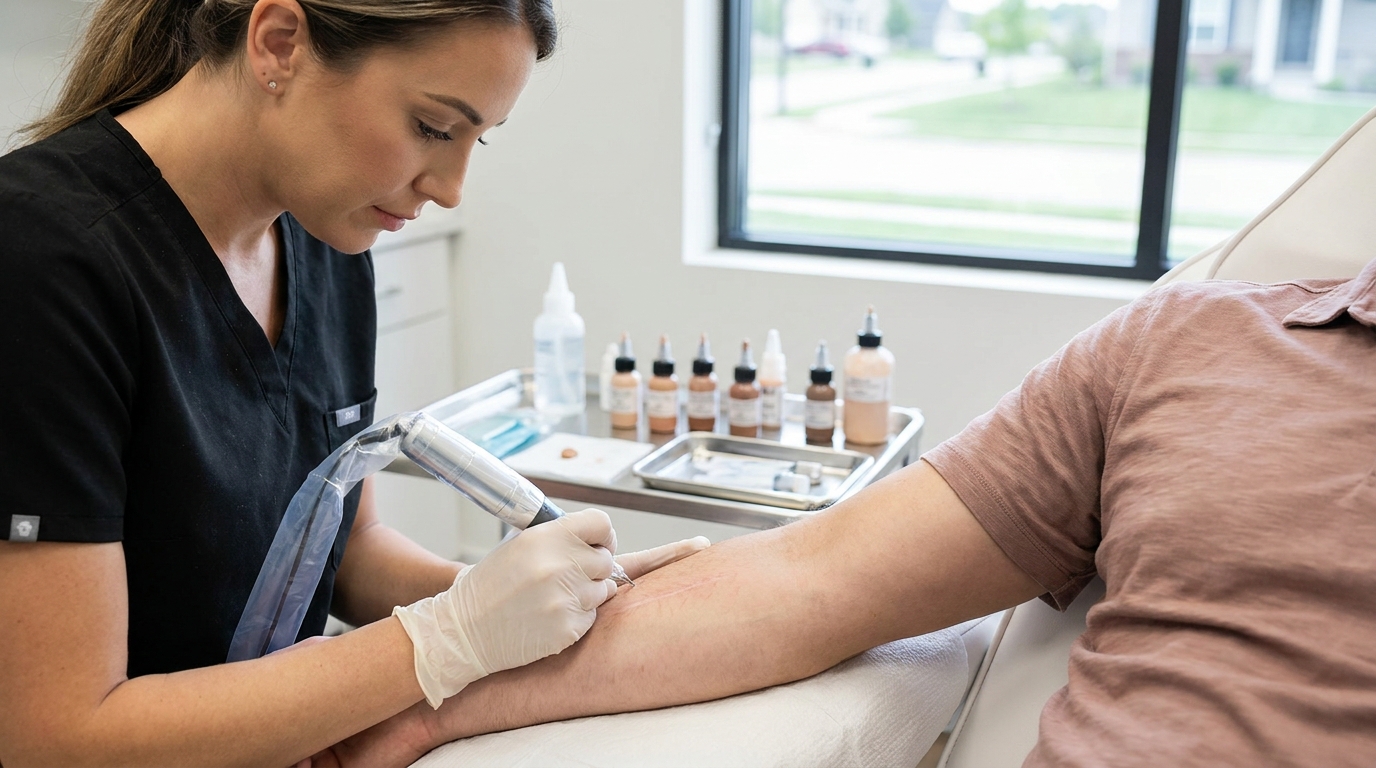
Wentzville residents are catching on fast. Whether it's a surgical line, a burn mark, or something left behind from an injury, scar camouflage gives you an option that lasts longer than concealer and looks better than hoping people don't notice. But like any cosmetic work, it requires precision, experience, and realistic expectations—not wishful thinking.
What Actually Happens During the Process
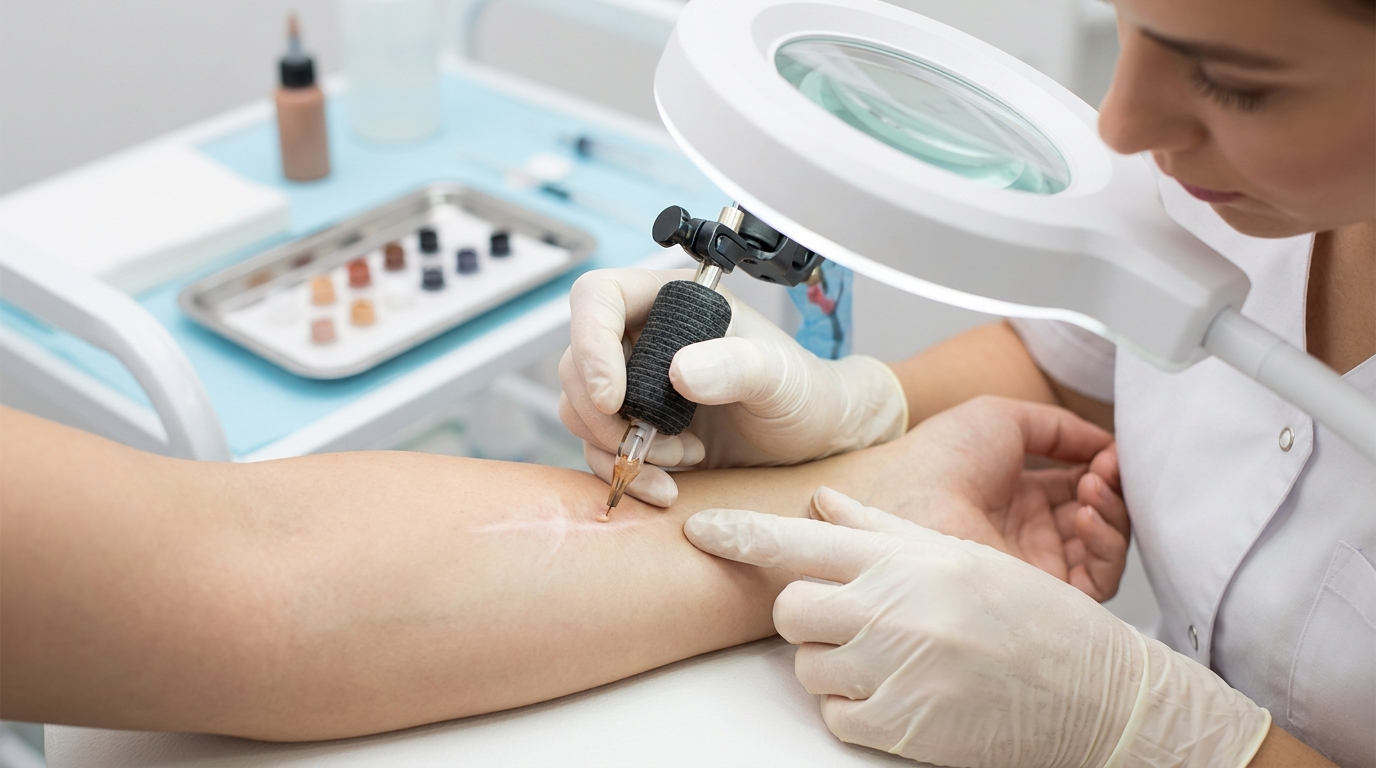
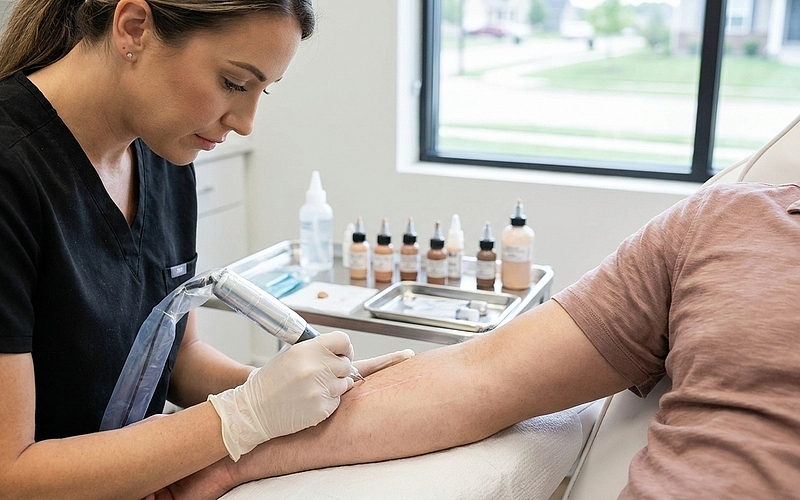
Scar camouflage is medical tattooing with a different mission. Instead of adding art, you're erasing contrast. The goal is to deposit pigment that matches the surrounding tissue so your eye stops catching the difference. A trained technician custom-blends shades based on your specific skin tone, lighting conditions, and the scar's depth. Then they layer pigment into the upper dermal layers using a fine needle until the scar fades into the background.
This isn't guesswork. The practitioner maps out color gradients, tests samples, and builds coverage gradually across multiple passes. If your scar is lighter than your skin, they're adding warmth. If it's darker or discolored, they're neutralizing undertones. Every scar behaves differently depending on how it healed, so the approach shifts case by case.
Not Every Scar Qualifies
You can't walk in with a fresh wound and expect results. Scar camouflage works best on mature scars—ones that have fully healed, stabilized in color, and stopped changing texture. That usually means waiting at least a year, sometimes longer. Raised scars, keloids, or anything still inflamed won't take pigment the same way flat tissue does. And if your scar is still red or purple, it's too early.
The ideal candidate has a scar that's lighter or darker than their natural tone, sits flat or close to flat, and hasn't responded well to other treatments. Surgical scars, burn scars, injury marks, and even some types of hyperpigmentation fall into this category. But you'll need a consultation to know for sure. No technician worth their certification will promise results without seeing the scar in person.
Common candidates include
- Post-surgical scars from cosmetic or medical procedures
- Burn scars that have fully healed and flattened
- Injury-related scarring from accidents or trauma
- Stretch marks with significant color contrast
- Acne scars that left discoloration rather than texture
Why It Beats Daily Cover-Ups
Makeup works until it doesn't. It smudges. It transfers. It looks obvious under certain lights. And every morning, you're back at square one. Scar camouflage removes that cycle. Once the pigment sets, you're covered. No reapplication. No worrying about sweat or water. No second-guessing your appearance before you leave the house.
The pigments used in scar camouflage are medical-grade, meaning they're formulated to stay stable under the skin for years. They fade gradually over time, but you're looking at longevity most topical solutions can't touch. And because the color is embedded in the tissue, it moves with your skin naturally—no caking, no separation, no weird finish.
Key advantages over temporary solutions
- Semi-permanent results that last several years
- No daily application or removal routine
- Water-resistant and sweat-proof from day one
- Natural movement with facial expressions and body motion
- Eliminates the cost of endless concealer purchases
The Discomfort Is Manageable
Most clients describe the sensation as tolerable—somewhere between light scratching and mild stinging. It's not painless, but it's also not the nightmare people imagine. Sessions typically run one to two hours depending on the scar's size and complexity. Some practitioners offer numbing cream to take the edge off, though scar tissue itself often has reduced sensation compared to normal skin.
Afterward, expect some redness and minor swelling. That's normal. The pigment will look darker initially, then lighten as it heals over the next few weeks. You'll need to baby the area—no sun exposure, no swimming, no picking at scabs. Follow the scar camouflage after care protocol exactly, or you risk uneven fading and wasted time.
Multiple Sessions Are the Norm
One appointment rarely does it. Scars absorb pigment differently than healthy skin, and achieving seamless blending usually requires layering. Most people need two to four sessions spaced several weeks apart. Each visit builds on the last, adjusting tone and coverage until the result looks natural under different lighting conditions.
Touch-ups down the line are expected too. As the pigment fades over the years, you'll want to refresh it to maintain the effect. That's not a flaw in the process—it's how semi-permanent pigmentation works. Plan for it, budget for it, and you won't be caught off guard.
Session planning typically involves
- Initial consultation to assess scar type and skin tone
- First session to establish base pigment layer
- Follow-up sessions to refine color and coverage
- Periodic touch-ups every few years as pigment fades
- Adjustments based on how your skin responds to pigment
Finding the Right Technician in Wentzville
Not all practitioners are equal. Scar camouflage demands an understanding of skin undertones, scar behavior, and pigment chemistry that goes beyond standard tattooing. Look for someone with certification in medical or paramedical tattooing, a portfolio showing diverse skin tones and scar types, and honest communication about what's realistic.
Ask to see before-and-after photos. Request references. Don't settle for vague answers about training or technique. A qualified technician will walk you through every step, explain why certain pigments are chosen, and set expectations about healing time and long-term maintenance. If they're rushing you or overpromising, walk away.
Red flags to watch for
- No certification or training documentation available
- Unwillingness to show past client results
- Promises of one-session perfection
- Hesitation to discuss risks or limitations
- Lack of detailed aftercare instructions
Aftercare Determines Your Results
The technician does the work, but you control the outcome. Skipping aftercare steps can lead to patchy fading, infection, or pigment loss. Keep the area clean and dry. Avoid direct sunlight—UV exposure breaks down pigment faster than anything else. Don't submerge the treated area in water for at least two weeks. And resist the urge to pick at any flaking or scabbing.
Most practitioners provide a detailed after care instructions sheet. Follow it word for word. If something feels off—excessive swelling, unusual discharge, severe pain—reach out immediately. Catching problems early keeps small issues from becoming permanent ones.
Essential aftercare steps include
- Keeping the area clean with gentle, fragrance-free cleansers
- Applying recommended ointments to support healing
- Avoiding sun exposure and using high-SPF sunscreen once healed
- Staying out of pools, hot tubs, and natural bodies of water
- Refraining from picking, scratching, or disturbing the healing tissue
Confidence Shifts When the Scar Fades
People underestimate the mental weight of visible scars. You know it's there. You adjust your clothing, your posture, your habits to minimize attention. Scar camouflage removes that constant awareness. It doesn't erase what happened, but it changes how you interact with the world—and how the world interacts with you.
Wentzville clients report feeling more comfortable in short sleeves, more willing to participate in activities they'd avoided, and less anxious about new social situations. That's the real payoff. It's not vanity. It's reclaiming space you'd given up because a scar made you feel exposed.
Ready to See Your Scar Disappear Into the Background?
We know how much confidence can shift when your scar stops being the first thing you notice in the mirror. If you're ready to explore scar camouflage and want honest answers from a team that understands both the art and science behind it, let's talk. Call us at 314-265-7542 to get your questions answered, or book now and take the first step toward blending your scar away for good.
‹ Back
Recent Posts
-
Making Scars Less Noticeable With Scar Camouflage in Wentzville
October 20, 2026
-
Long-Lasting Lip Color With Lip Blushing in Wentzville
October 6, 2026
-
Defining Your Lip Shape With Lip Blushing in Wentzville
September 22, 2026
-

Thinking About Permanent Brow Makeup in Wentzville?
September 2, 2026
-


Licenses:
- Licensed Tattoo Artist in Missouri
- Medical Micro Pigmentation Certified
- Ombre Brow Master Artist/Educator
Contact Us
-
Malorie Harris LLC
223 Creekside Office Drive
Wentzville, MO 63385
Hours
-
Monday-Friday: 10:00 AM - 4:00 PM
Saturday & Sunday: Closed
By Appointment Only
Site by